
Black Friday Abandoned Cart Calls: What to Change for BFCM 2026
Keep the 10-minute call, then change four things for Cyber Week: who gets a call, what the agent may offer, how often one shopper hears from you and how many credits you hold.

What changes for Black Friday, and what stays the same
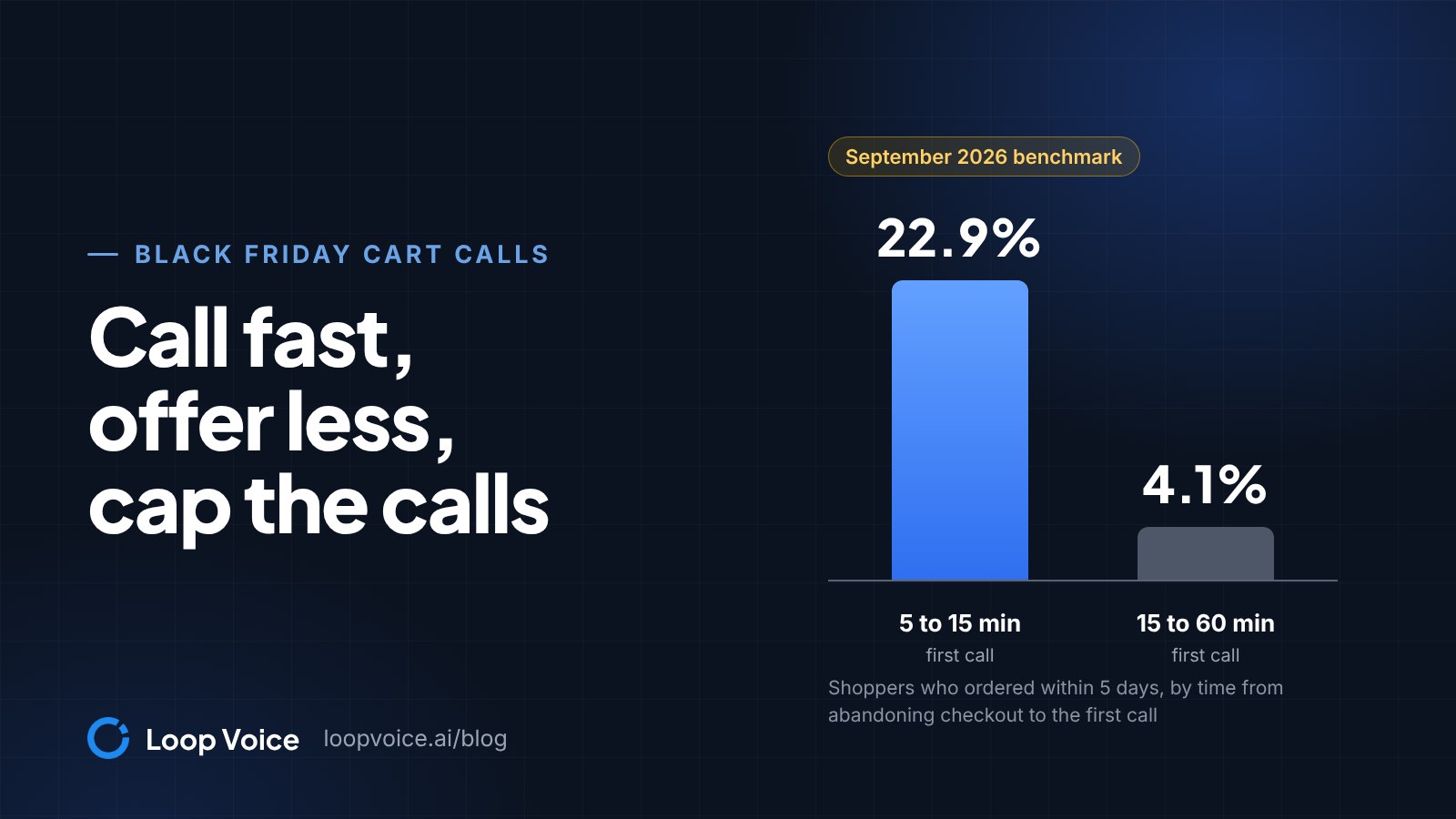
Keep calling abandoned checkouts about 10 minutes after the shopper leaves, and change four things for Black Friday and Cyber Monday: who gets a call, what the agent may offer, how often one shopper hears from you, and how many credits you hold. Speed is worth protecting: in Loop Voice's September 2026 benchmark, shoppers first called 5 to 15 minutes after abandoning ordered at 22.9% within 5 days, against 4.1% when the first call came 15 to 60 minutes later. That is a comparison across shoppers in 7 stores, not a controlled test.
The week is bigger and noisier than a normal one. Shopify merchants sold $14.6 billion over the 2025 Black Friday Cyber Monday weekend, peaking at $5.1 million a minute at 12:01 p.m. Eastern on Black Friday (Shopify). Adobe expects US shoppers to spend $47.5 billion online over Cyber Week 2026, with discounts reaching up to 30% off list price (Adobe's 2026 forecast). More carts, deeper discounts and other brands following up with the same shoppers are why the usual settings need a second look.
| Setting | Normal weeks | Black Friday week |
|---|---|---|
| Wait before the first call | About 10 minutes | About 10 minutes |
| Who gets a call | Every consented shopper in the flow | Carts where an answered call still pays after the sale price |
| Offer on the call | A code on the second call, if you allow one | No extra code during the sale; fix the checkout, shipping or size problem instead |
| Calls per shopper | Your usual cap | A weekly call cap equal to one sequence's calls |
| Credits | Your monthly plan | Sized for the week's volume before it starts |
| Measurement | Attributed orders | Attributed orders plus a holdout |
BFCM 2026 dates, and what to finish before each
Thanksgiving falls on Thursday, November 26, 2026, so Black Friday is November 27 and Cyber Monday is November 30. Adobe expects Cyber Monday to be the biggest online day of the season at $15.1 billion, with Black Friday second at $12.9 billion and growing faster (Adobe).
| When | What to finish |
|---|---|
| By November 13 | Test the sale version of the agent in the simulator and on your own phone. Check that new checkout forms collect call consent. |
| November 16 to 20 | Load the sale terms into the knowledge base, set the discount rules and caps, and size your credits. |
| November 23 to 25 | Freeze the flow. No new steps or prompt edits until Cyber Monday is over. |
| November 26 to 30 | Read calls every morning: failing codes, sold-out items, opt-outs. |
| December 1 to 7 | Put the normal settings back and read the holdout. |
Loop Voice lets you stage a new step in Draft inside a running flow, which is handy the rest of the year. During the peak, a frozen flow is easier to read and harder to break.
Why shoppers abandon during a sale, and which reasons a call can fix
Many shoppers who leave a checkout were never close to buying. Baymard Institute puts the average documented cart abandonment rate at 70.22%, and 42% of US online shoppers have abandoned a cart because they were just browsing (Baymard). Leaving the browsers out, the top reasons for abandoning during checkout were extra costs (40%), slow delivery (20%), not trusting the site with a card (19%), forced account creation (18%), a long or complicated checkout (17%) and site errors (17%).
Loop Voice's own calls point the same way. In September, 824 abandoned-checkout conversations gave a reason: 33.4% of those shoppers were just browsing, 25.6% were waiting for a discount or checking the price, and 17% had a problem the call could fix on the spot, a site or checkout error (11.7%) or a product question (5.5%).
During a sale, the fixable problems get specific: a code that will not apply, a sale price that did not carry into checkout, a shipping cost that eats the discount, a size that sold out between cart and checkout. Those are the calls worth making. A shopper comparing your Black Friday price with three other tabs is not, and a text does that job for less.
Got it. If you're seeing six-month backup or other options, those are just optional add-ons.
If you don't want them, selecting no thanks is totally fine. After you hit no thanks, does it bring you back to a page with complete purchase again, or is it showing something else?
Okay. Now it says your order is confirmed.
Perfect. That means it went through.
Before the sale starts, ask Loop IQ which discount codes are failing Shopify verification, and fix them before shoppers find out on the phone.
Decide who gets a call this week
A sale week brings more carts, and some are too cheap for a call to pay. An answered conversation uses about 1.5 credits, which works out to about $0.95 to $1.49 on monthly plans, and calls nobody answers use none (pricing).
Example: a store with a 40% gross margin and a $115 average Black Friday cart, close to the $114.70 Shopify merchants averaged over BFCM 2025, makes about $46 on an order. In September, 16.5% of abandoned-checkout shoppers called picked up at least once, and a shopper who answers the first call can pick up the second too, so budget about 20 answered conversations per 100 shoppers called. At $1.49 per answered conversation, each called shopper costs about $0.30, so one extra order for every 150 shoppers called covers the credits.
Use that math to set three rules before the week:
- Call carts where a conversation can still change the outcome: higher-value carts, products people ask about before they buy, and first orders with a question attached.
- Text instead when the cart is only doorbusters priced near cost, or too small for the math above to work.
- Never call shoppers who did not agree to calls, who asked you to stop, or who are on your do-not-contact list. If the sale brings first-time buyers, check that the consent wording on your checkout covers calls made with an AI voice (calling rules for AI calls).
What the agent may offer during a sale
The sale price is the offer. With discounts expected to reach up to 30% off list price during Cyber Week, a recovery code on top can teach shoppers to abandon on purpose and can stack below your margin.
In Loop Voice the agent can only use the Shopify discount codes you allow, at the point in the flow you choose. For the week:
- Turn off the code on the second call during the sale, or swap it for free shipping if extra costs are the objection you hear most.
- If you keep a code, make it end with the sale. A code still applies on top of prices you lowered directly, so limit it to full-price products or collections in its Applies to settings (Shopify Help Center). Stacking with your other Black Friday discounts only happens if you allow it in the code's Combinations section (combining discounts).
- Let the agent sell the deal instead: the end date, the free-shipping threshold and the last day to order for delivery before December 25.
Our call script template keeps one rule all year: offer a code only when price is the objection. During a sale the discount is already on the table, so that rule matters even more.
Calling hours and timing
Keep the wait at about 10 minutes. Loop Voice's abandoned checkout flow waits ten minutes, calls, texts the checkout link, waits, calls again with a discount and sends a last note, and it stops the moment the shopper orders, says stop or has a negative call.
Calls only go out inside the calling window you set, in each shopper's own time zone. The federal rule bars telephone solicitations before 8 a.m. or after 9 p.m. at the called party's location (47 CFR 64.1200), and some states set tighter hours.
Evenings matter more this week. On weekdays in September, calls placed between 5 p.m. and 9 p.m. were answered more often than calls between 8 a.m. and noon (7.0% against 5.4%), and Adobe saw Cyber Monday 2025 spending peak between 8 p.m. and 10 p.m., at $16 million a minute (Adobe).
So the late-evening checkouts land near the end of the calling window. One left at 9:15 p.m. gets its first call the next morning. In September, shoppers who abandoned after calling hours and were called the next day ordered at 6.5%, better than checkouts abandoned in calling hours whose first call came 15 minutes to 4 hours later (4.1% and 4.7%).
Thanksgiving Day needs its own check. Some states limit sales calls on holidays; Rhode Island, for one, allows unsolicited telephone sales calls only in set hours that leave out Sundays and state and federal holidays (Rhode Island law), so check the states you call with whoever handles your compliance. Where calls are allowed, shoppers are out there (Adobe expects $6.9 billion in online spending that day), but a recovery call during a family dinner lands badly, and a shorter calling window with the text carrying the evening is a reasonable middle.
One shopper, several checkouts: set caps
A sale shopper may start more than one checkout, and other brands they browsed may be following up too. Set a weekly call cap equal to the calls in one sequence, so a second checkout brings no extra calls. Loop Voice caps calls per customer by week, month, quarter, six months or year, set per agent.
Watch opt-outs daily. Across all calls in September, 9.5% of shoppers who picked up asked not to be called again, and 6.5% of shoppers who got a text replied STOP. Every opt-out lands on the do-not-contact list before the next step runs, and that list is honored by every flow, campaign and text, so a bad week costs you those shoppers in every later campaign too.
If opt-outs climb well above your normal level, cut the second call before you cut the first.
Credits for a sale week
Size the week before it starts, because a sale week can use a month of credits in five days.
Example: a store expects 3,000 abandoned checkouts over Cyber Week, all from shoppers with call consent. Budgeting about 20 answered conversations per 100 shoppers called, that is about 600 answered conversations, or about 900 credits: nearly twice the Growth plan's 500 monthly credits and inside Scale's 1,500.
Campaigns show a credit estimate before launch and pause when credits run out, then resume when you top up. The pricing page notes that conversations beyond your plan's credits are billed at your plan's per-extra-credit rate.
Load the sale into the agent
The agent answers from its knowledge base: your site pages, policies and FAQ, crawled, your product catalog, synced, and any PDF, DOC or text file you upload. Give it the sale before the shoppers do:
- The sale's start and end times, with the time zone, and what is excluded.
- Whether codes stack, and the free-shipping threshold.
- The last order date for delivery before December 25 for each shipping method. USPS recommends sending by December 17 for Ground Advantage and December 18 for Priority Mail in the lower 48 states (USPS).
- What to offer when an item or size is gone: the in-stock alternative, or nothing.
Re-crawl the site after your sale pages go live. Then use the retrieval test: type what a shopper would ask, such as "Does the Black Friday price include the bundle?", and read the exact passages the agent gets back. A wrong passage is a page to fix before the week, not a prompt to rewrite during it.
Texts get the credit on many orders
Most holiday shopping happens on phones: Adobe expects 57.4% of US online holiday spending to come through mobile devices in 2026. That suits the call-and-text sequence. In September, a text was the credited touch on 77.8% of attributed abandoned-checkout orders and an answered call on 22.2%. A text takes the credit whenever the shopper ordered after a text with no answered call in the window, so judge the two channels together.
Texts carry merge fields for the name, the product, the checkout link and the discount code, with the required STOP footer, so the shopper can finish on the phone in their hand. If you also run Klaviyo emails, this timing plan keeps the call, the emails and one text from piling up on the same shopper.
Measure the week with a holdout
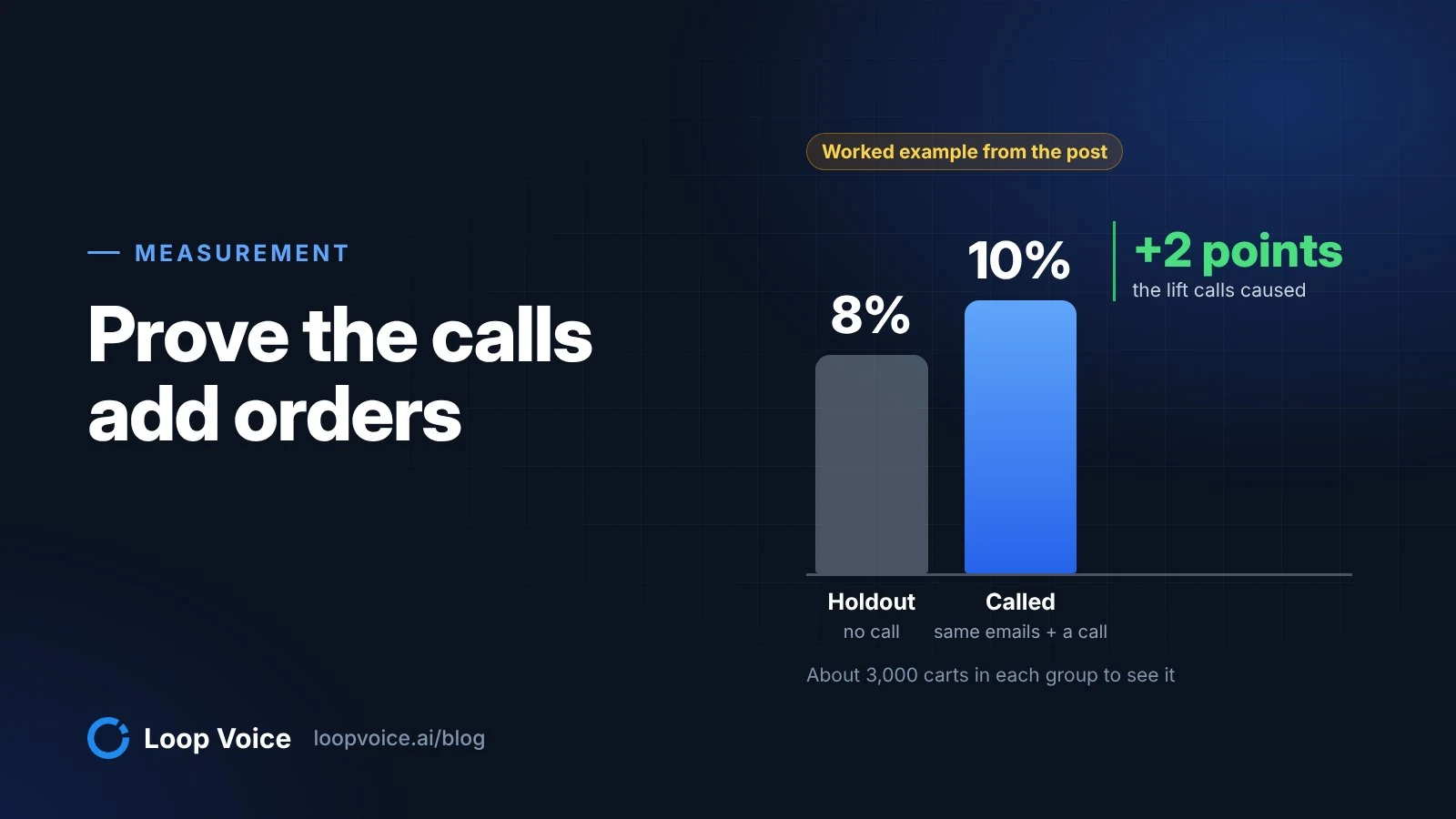
Sale weeks flatter attribution. Some shoppers who abandon on Black Friday come back on Cyber Monday without any call, and the order still matches a call or text if it lands inside the attribution window. Loop Voice ties orders to calls and texts by Shopify order number, which shows what the calls touched, not what they added.
To see what they added, keep a random share of eligible checkouts out of the calls through the week and compare orders per eligible checkout between the two groups. The holdout guide shows how to size it. If a holdout is already running, keep it on through Cyber Monday; the busiest week is the one you most need to read.
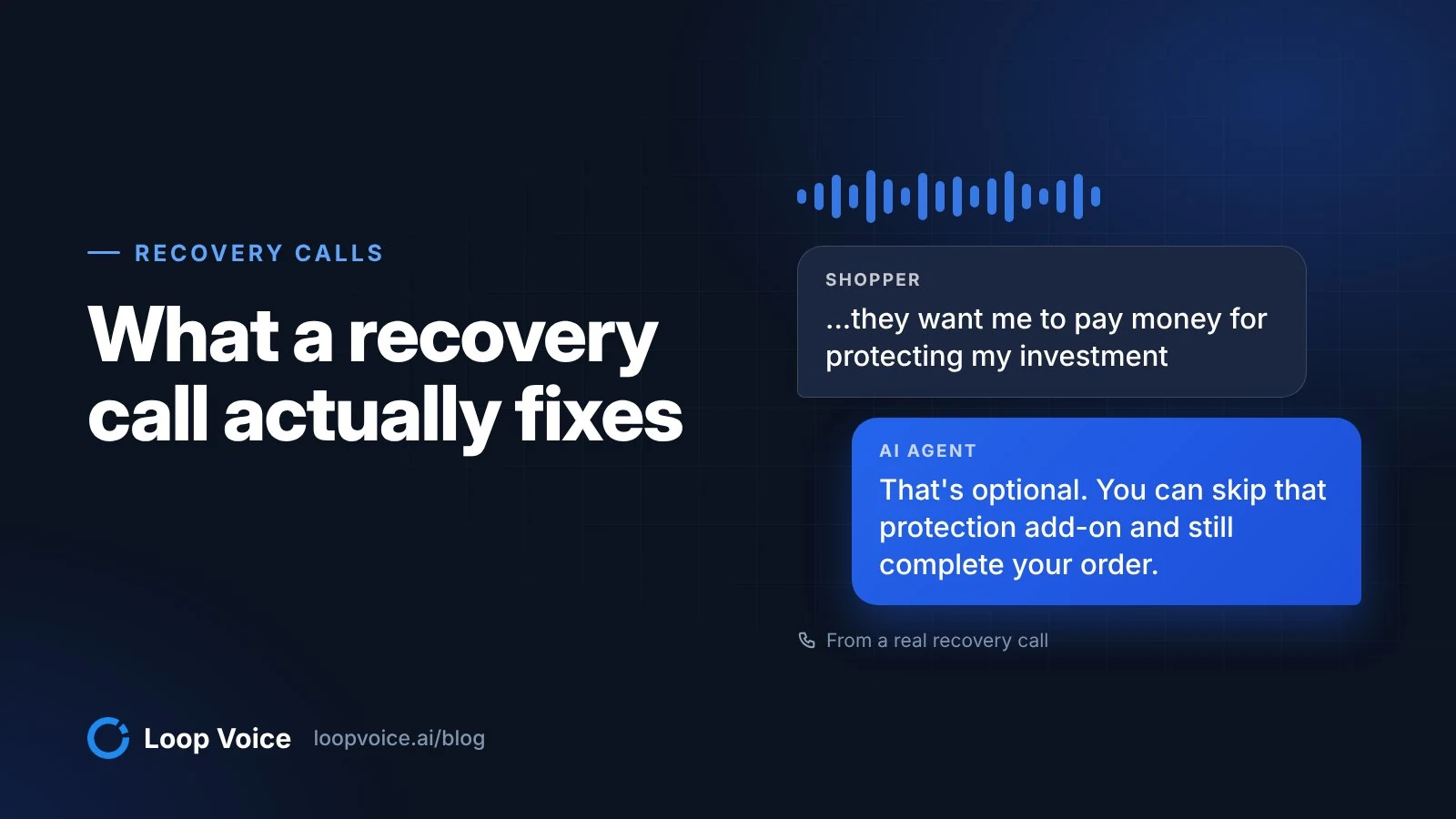
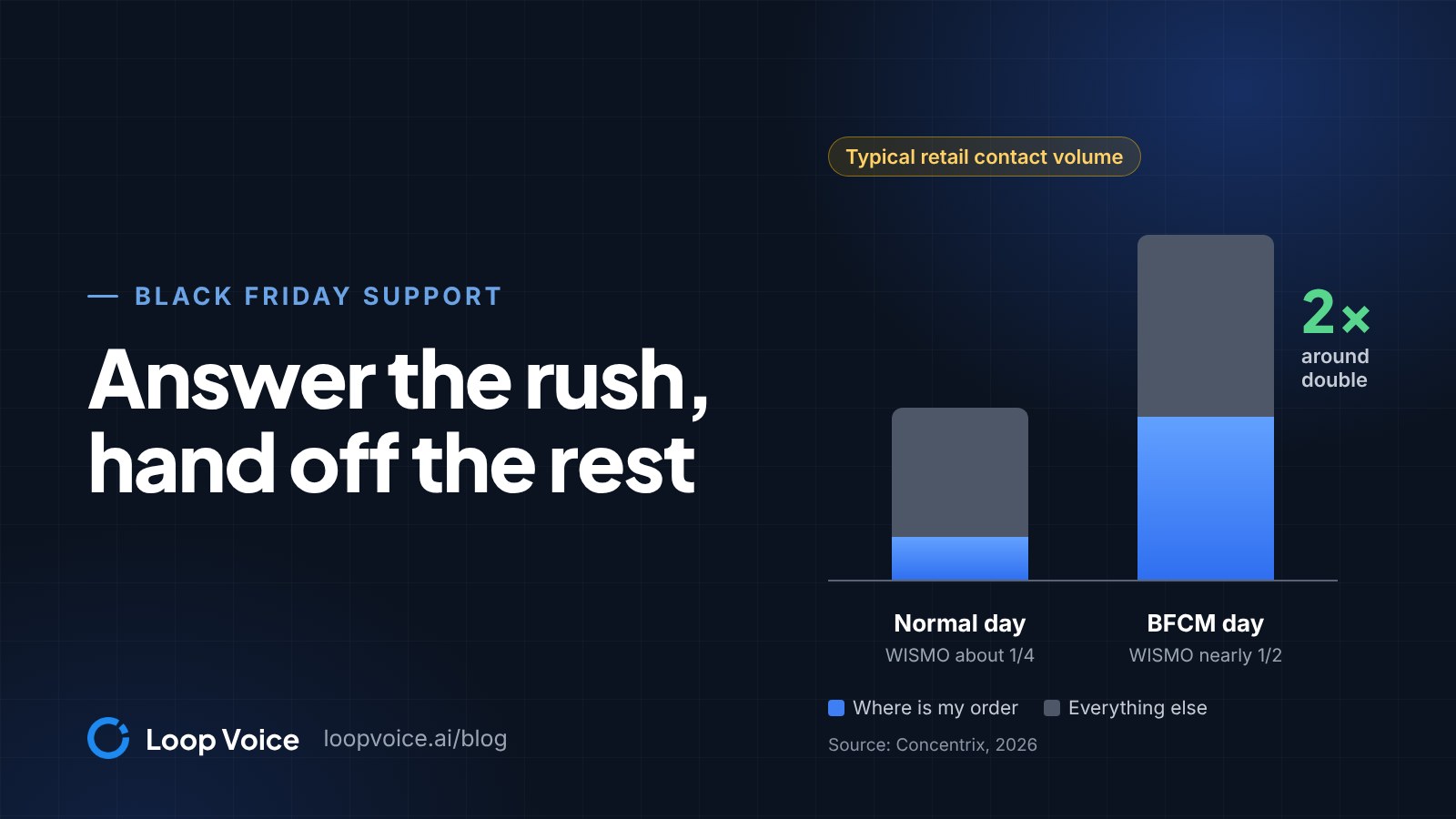
For the setup itself, start from the abandoned cart use case, and hear what these calls sound like in real recovery calls, transcribed. If your phones also get busy, the Black Friday support guide covers inbound calls.
Frequently asked questions
Should I call abandoned carts on Thanksgiving Day?
Check the states you call first: some limit sales calls on holidays, and Rhode Island, for one, allows unsolicited telephone sales calls only in set hours that leave out Sundays and state and federal holidays. Where calls are allowed, shoppers are buying, with $6.9 billion in US online spending expected that day, but a recovery call during a family dinner lands badly, so a shorter calling window is a reasonable middle.
Should a Black Friday recovery call offer an extra discount?
Usually not during the sale. The sale price is already the offer, and a code on top can teach shoppers to abandon on purpose. Keep the agent to fixing what stopped the order, such as a checkout error or a shipping cost, and if you keep a code, make it end with the sale and limit it to full-price items in Shopify.
How many credits will Black Friday week use?
Multiply the abandoned checkouts you expect by the answered conversations you expect per shopper called, then by about 1.5 credits per answered conversation. In September, 16.5% of abandoned-checkout shoppers picked up at least once, so budget about 20 answered conversations per 100 shoppers: 3,000 checkouts would mean about 600 answered conversations, or about 900 credits. Calls nobody answers use no credits.
What if a shopper abandons several checkouts during Black Friday week?
Set a weekly call cap equal to the calls in one sequence, so a second checkout brings no extra calls. The flow also stops the moment they order, say stop or have a negative call, and anyone who opts out goes on the do-not-contact list before the next step runs.
Should cart recovery calls run on Black Friday itself?
Yes, if your consent, calling hours and caps are in place. Adobe expects Cyber Monday and Black Friday to be the two biggest online shopping days of the 2026 season, so it is the wrong week to switch a working flow off. Read the calls each morning that week for failing codes, sold-out items and opt-outs, and cut the second call before the first if opt-outs climb.
When should cart recovery settings go back to normal after Cyber Monday?
Put the code, caps and calling window back on December 1, and keep the holdout running until you have read the week. Keep the last shipping dates in the knowledge base until they pass, since shoppers keep asking whether an order will arrive in time.
Sources
- Shopify merchants generate record-breaking $14.6 billion in Black Friday Cyber Monday sales (Shopify, 2025)
- Adobe: U.S. Holiday Shopping Season to Hit Record $275.1 Billion Online, Rising 6.7% YoY (Adobe, 2026)
- Adobe: Cyber Monday Hits Record $14.25 Billion in Online Spending (Adobe, 2025)
- Cart abandonment rate statistics (Baymard Institute, 2025)
- Amount off discounts (Shopify Help Center, 2026)
- Combining discounts (Shopify Help Center, 2026)
- 47 CFR 64.1200: Delivery restrictions (eCFR, 2026)
- R.I. Gen. Laws 5-61-2: Definitions (State of Rhode Island General Assembly, 2026)
- Postal Service Recommends 2026 Holiday Mailing and Shipping Dates (USPS, 2026)
Hear it before you decide
Listen to real recovery calls, or see Loop Voice call a test checkout on your own store.